

Afrah Shafiq's data-driven art asks how systems reward some minds and erase others.
In Arundhati Roy’s debut novel The God of Small Things, Ammu is a woman with many intelligences. She deciphers the world through the sensory fragments of insects, river currents, factory fumes. This helps her register the class-caste fissures in her Kerala hometown that others often ignored or didn’t notice. Her twin children, Estha and Rahel, inherit her vigilance. But the social order registers her pattern-recognition as emotional instability, and her divorce as proof of her being an “unfit mother” rather than survival intelligence.
Given the reality of permeating environments where women were barely allowed to leave home, let alone be documented for their footsteps in the world, fictional lenses like Ammu’s have often served as the gateway to documenting unvalued ways of knowing. But access to archival technology opened the doors for art to document non-fictional feminist cognitive worlds alongside, and multidisciplinary artist Afrah Shafiq seized that chance to subvert the narrative.
As an archivist, Shafiq has spent more than a decade documenting women’s work and ways of being as data through her art.
Her research-driven and tech-blending art has appeared at major contemporary events including the Kochi-Muziris Biennale and the Dhaka Art Summit, and in museum and gallery contexts such as the Centre Pompidou-Metz and the Julia Stoschek Foundation in Düsseldorf. She has also presented projects at venues like the Kiran Nadar Museum of Art in New Delhi and Experimenter in Kolkata among other global exhibitions.
Ever since Shafiq created The Bride Who Could Not Stop Crying in 2023, an interactive scroll-based game centred on a Slavic bride caught in an endless loop of tears, and used embroidery and domestic repetition as a hidden language to explore women’s suppressed desires, she couldn’t stop thinking about embroidery as text. “Embroidery is storytelling,” she said. “Traditional embroidery from certain communities with their recurring motifs, patterns, or styles is often dismissed as ‘folky’ or decorative. But with serious study, you learn how motifs can become a dictionary of decoding community lives.”
So for India Art Fair 2026, Shafiq decided to use embroidery motifs as her cynosure. Her work spreads across a 400x100-foot façade—the fair’s entrance—as prints of embroidery samplers. Shafiq explains that a sampler is often early, rough embroidery work “like Victorian girls’ first embroidery sketchbooks with unfinished alphabets, borders, booties, half-done patterns like shorthand notes.”
A Giant Sampler (the title of her installation) focuses on the counted- thread method of embroidery which is a grid-based cross-stitch math. It features counted thread traditions such as kasuti (Karnataka), blackwork (Spain), tatreez (Palestine), medieval Egyptian and ancient Greek embroideries sourced from the Victoria and Albert Museum’s online collections, all redrawn as motifs. The intention behind this was to skip the wallpaper-design routine commonly associated with entrances and turn the façade itself into a site of inquiry for embroidery as an actual system of knowledge.
For Shafiq, who currently resides in Goa, counted-thread embroidery presents itself as an evolved form of language that is often lost because it is primarily spoken by women who hold its threads between their fingers. In her archival world, these are recognised for what they really are: forms of language, self-ownership, and unindexed knowledge. “We study cubism, impressionism, and structuralism so extensively, but these [counted thread embroidery forms] are parallel movements that women were also doing in image-making,” she says. “Where are those histories?”
Shafiq’s own history of inquiry started early. While studying literature in college in Bengaluru, she noticed how crowded the syllabus was with male writers. Only a small portion of the syllabus had women’s words—including those of Virginia Woolf and Sylvia Plath. That small portion changed her. It helped her interpret life within her own family.
The artist came from what she calls a very traditional Indian household and a very gendered upbringing. “There were completely different sets of rules for the boys in my family versus me in every way,” she said. She felt stuck and furious in that double standard. Reading women’s work and learning ways of seeing the world and herself from documentary archivist Madhushree Datta and filmmaker and founder of Agents of Ishq Paromita Vohra in the course of her work helped Shafiq recognise that her frustrations were systemic and not just personal.
This state of women reading and their work being read stayed long with her into her career as an archivist. She platformed them in her interactive web-based art project Sultana’s Reality, taking archival images of women reading and animating them into fluid digital collages. She used those images as data to question how women were educated and what that education was meant to produce.

Sultana’s Reality reveals how conversations around education for women in colonial India (and the world) were often dangled as carrots to produce “better Brahminical women”, “better wives” or women who’d serve men’s social status better by demonstrating an ability to read and write. It wasn’t advertised as a tool for empowering women’s inner and outer lives.
I found it echoing the mighty discernments of author Sujatha Gidla in her non-fiction debut Ants Among Elephants: An Untouchable Family and the Making of Modern India. In the book, Gidla views education as a vital tool for Dalit empowerment and upward mobility, yet sharply critiques it as insufficient against entrenched caste discrimination, often a “superficial Band-Aid” that fails to dismantle systemic barriers, as her family’s pursuit of degrees still met with daily humiliation and segregation.
Then there’s also that moment when you realise that early society taught every woman in Victorian novels to read, play the pianoforte, and embroider to pad the product value of her eligibility in the marriage market.
This is where non-institutional archives play a pivotal role in documenting lost feminist data, proving how everyday artifacts reshape feminist history. In 1974, Joan Nestle founded the Lesbian Herstory Archives (LHA) in her New York apartment, a non-institutional collection of zines, diaries, oral histories, and T-shirts from lesbian lives, digitised over 500-plus interviews. LHA enabled global access to erased narratives of the everyday queer experience of quiet, boredom, refusal, and joy.
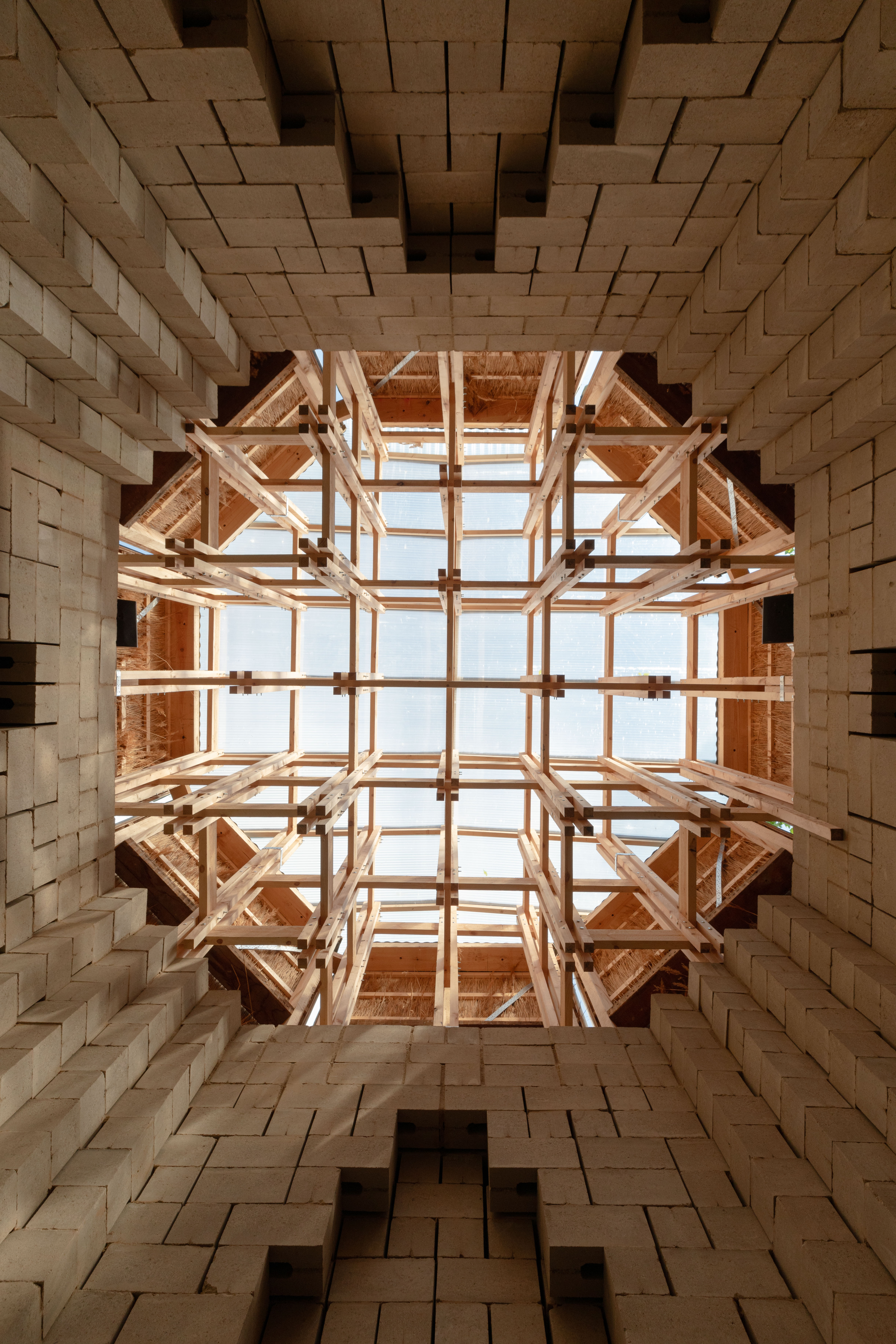
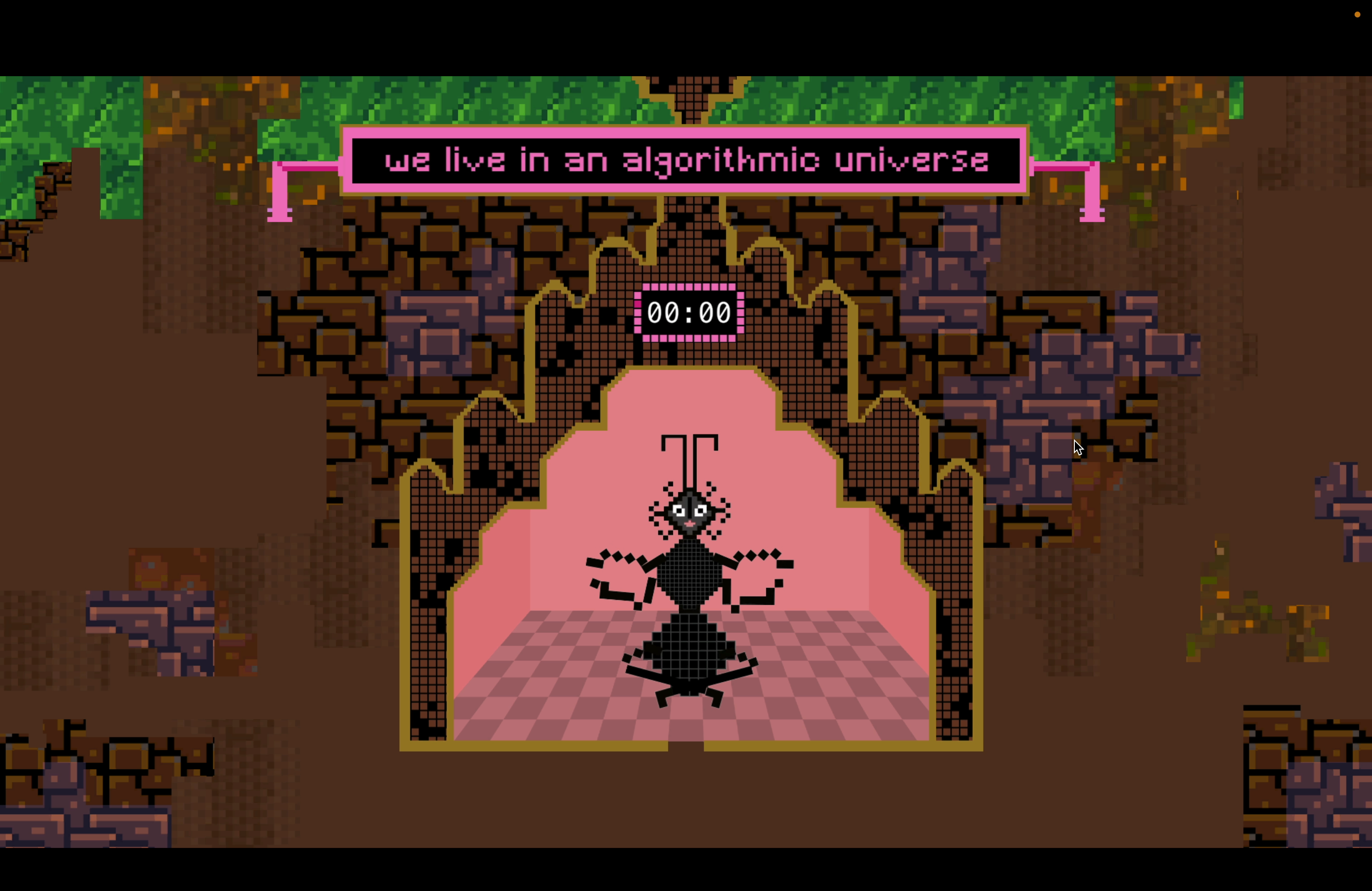
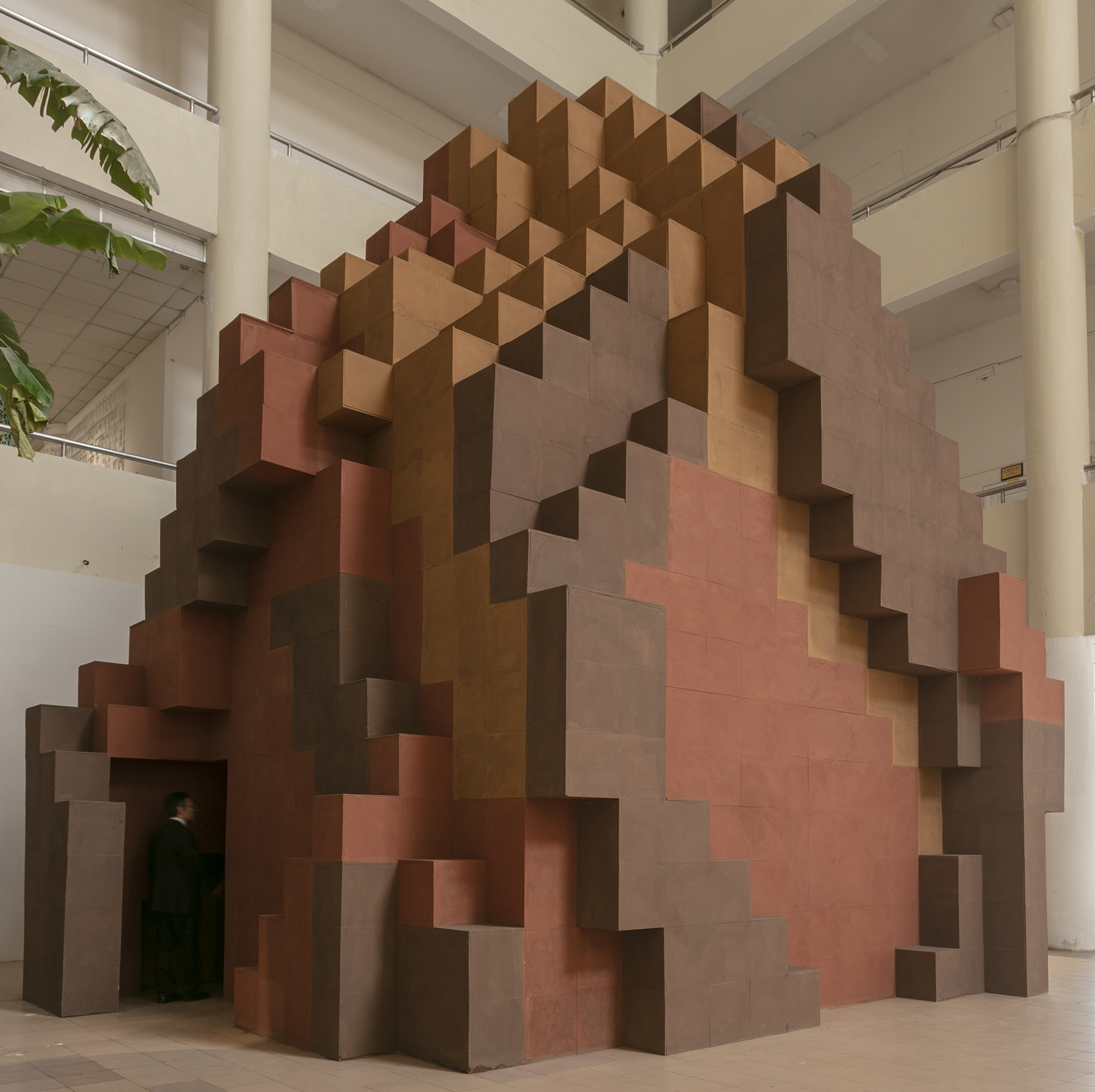
Shafiq fed into non-institutional archives with st.itch in 2019-2020, an installation where she turned global counter-thread embroidery traditions into a massive, scannable digital QR code archive, making women’s routine domestic pattern-work legible as cognitive labour. Where Do the Ants Go?, her interactive installation in 2023, proposed ants as a model of collective, distributed intelligence, expanding her feminist inquiry into who and what gets to count as intelligent.
Such feminist archival projects underline critical questions: What does an archive remember? What counts as data? Who counts them?
Queer reporting and literature extensively ask these questions. Documentation around queer lives in India remains thin, and statistics are scarce. LGBTQIA+ persons often have to rely on binary systems to access healthcare, shelter, employment, and belonging. In that vacuum, the idea of who qualifies as an expert on data begins to blur. Activist and journalist Sudipta Das reported for queerbeat in 2024 that non-binary transpersons in India frequently turn to individual experiences within the community as information for accessing gender-affirming care. They argued that in an extremely rigid system, queer individuals struggle to be seen, heard, and understood by healthcare professionals. Here, experiences, emotions, and needs become qualitative data.
When rigid, patriarchal systems dismiss emotion and experience as unworthy of documentation, it suppresses the opening for transformed sense-making that also benefits the voices of women, other queer persons, and those waiting to be heard.
Shafiq listens closely to these conditions and grows from the same suspicion that knowledge is never neutral. As a new mother, she has been thinking about emotion as expectation. Motherhood, she said, “was the most transformative thing that has ever happened to me physically and emotionally”. It confronted the prescribed emotional register attached to motherhood: of being “expected to feel intuitive and nourishing and full of warmth and care” at all times. But Shafiq often feels anger, and then guilt since her anger does not fit that script.
Neuroscience frames early motherhood as matrescence (a term introduced by anthropologist Dana Raphael): a period of enduring brain and endocrine restructuring, evidenced by studies like Hoekzema et al. (2017) in Nature Neuroscience, which document long-term changes in regions tied to emotion and social cognition.
Studies also document postpartum women’s anger as a distinct, meaningful response to stressors like sleep deprivation, unmet needs, and violated expectations, and often systemic pressures, not mere “hormones”. Qualitative research such as the 2022 Seeing Red: A Grounded Theory Study of Women’s Anger after Childbirth by Christine Ou and others reveals mothers describing rage from “compromised needs” (e.g. exhaustion, isolation), affirming its purpose as a signal for structural support gaps.
In our conversation, when Shafiq spoke of her postpartum rage, she also spoke about loving her baby. At times, it seemed like she felt compelled to say both in the same breath. I read her need to qualify the reality of her anger with the residuum of her love as an expectation from the outside; an outside that refuses to register “inconvenient” maternal emotions like rage, shame, and resentment as navigators that point to what needs to be fixed in broken systems. So to make this interior knowledge visible as exterior data, Shafiq dissents.
On February 5, 2026, at the entrance of the India Art Fair in Delhi, visitors will raise their phones to a massive printed façade and scan mangoes from Kasuti and waves from Japan and mythical animals from Palestine. In that simple act of scanning, searching and pausing, they will be practicing a quiet revolution, and encountering a deeper civic question:
If we are what we archive, what are we refusing to know?
Will the real archive please stand up?


